In the United States, consumer trends are experiencing a massive shift toward healthy, nutritious, and plant-based snacks. On the shelves of major supermarket chains like Whole Foods, Costco, or Trader Joe’s, nuts always command prime real estate. Among them, one specific nut is quietly asserting its position as “king” thanks to its unmistakable, exquisite flavor: Vietnamese cashews.
Although not the original homeland of the cashew tree, Vietnam has risen to become the world’s largest cashew exporter for decades. However, introducing Vietnamese cashews to the US market is not just a story of massive production volume; it is a journey of delivering a premium culinary experience where superior quality and indigenous flavors speak for themselves.
Binh Phuoc – The “Capital” of Golden Nuts
To understand what makes Vietnamese cashews so exceptional, American consumers need to know about the land that nurtures them. Over 50% of Vietnam’s cashew production comes from Binh Phuoc—a province in the Southeast region dubbed the “capital” of cashew trees.
A perfect combination of natural elements has bestowed a great privilege upon this region. The porous, fertile basalt red soil, paired with a distinctive tropical monsoon climate and abundant sunshine, creates the most ideal “terroir” for cashew trees to thrive. Unlike regions with heavy rainfall that yield spongy and bland nuts, the dry heat of Binh Phuoc during the harvest season helps the cashews crystallize, remaining firm and packing maximum nutrients.
The cashew trees here sink their roots deep into the red earth, extracting every drop of vitality to produce these “golden nuts,” which not only bring economic value but are also the pride of tens of thousands of Vietnamese farming households.
The Flavor Difference: Bold, Creamy, and Crunchy
When compared to cashews from other regions like Africa or India, Vietnamese cashews might not boast a giant size or a perfectly white appearance. However, culinary experts and gourmands in the US universally agree on one thing: Vietnamese cashews win unequivocally on flavor.
-
Dense core: Vietnamese cashews are medium-sized but incredibly dense. When you bite into one, you instantly feel a satisfying crunch that melts in your mouth, completely free of any chalky or crumbly texture.
-
Naturally sweet and buttery: Thanks to a significantly higher content of good fats (unsaturated fatty acids), Vietnamese cashews deliver a rich, creamy, and nutty taste with a deep, natural sweetness that requires absolutely no artificial sweeteners.
-
Distinct aroma: When properly roasted, Vietnamese cashews release a deep, intoxicating fragrance that awakens all the senses of the consumer.
This is exactly why many premium nut butter and nut milk producers in the US actively hunt for cashews sourced from Vietnam, ensuring their final products have the best natural creaminess and flavor.
The Art of Processing: Honoring Indigenous Values
The US market is not only importing raw cashew kernels but is increasingly opening its doors to deeply processed products from Vietnam. The Vietnamese have skillfully combined modern technology with traditional culinary arts to create products that captivate the refined American palate.
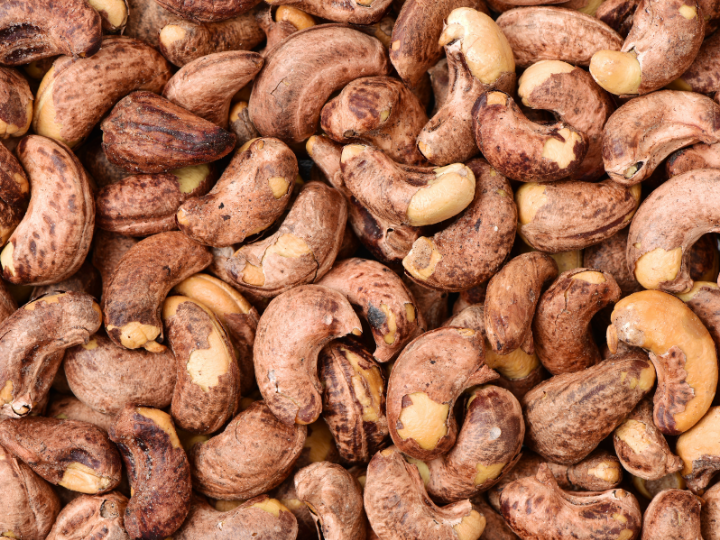
The standout product is undoubtedly the skin-on salt-roasted cashews. The traditional wood-fired roasting process, leaving the thin inner skin intact, prevents the nuts from absorbing too much salt, thereby preserving their original sweetness. This silken skin not only protects the cashew kernel from oxidation and scorching during the roast but also provides a fun, interactive peeling experience for the snacker.
Furthermore, Vietnamese businesses are constantly innovating to bring exciting variations to US shelves, such as spicy chili-garlic cashews, honey-roasted cashews, chocolate-coated cashews, or truffle-flavored cashews. This diversity helps Vietnamese cashews break the boundaries of a standard snack to become a premium ingredient for party platters, salads, and restaurant desserts across America.
Overcoming Strict Barriers: Moving Towards Sustainable Standards
The United States market is famous for having some of the strictest food safety and hygiene regulations in the world. For containers of cashews to deeply penetrate this market, the Vietnamese cashew industry has undergone a radical transformation.
Today, processing plants in Vietnam are equipped with highly automated, state-of-the-art machinery, utilizing AI optical sorting technology, and holding rigorous international certifications such as FDA, BRC, ISO, and HACCP.
Moreover, modern American consumers shop with their “conscience.” They care about how the cashews are grown, whether the farming practices destroy the environment, and if the farmers are paid a fair living wage. Grasping this, many cashew-growing areas in Binh Phuoc and Dong Nai have transitioned to Organic farming models, strictly minimizing pesticide use. Fair Trade programs are also being widely implemented to ensure a transparent supply chain, protect farmers’ rights, and commit to sustainable development.
Conclusion
Every Vietnamese cashew exported to the US carries not only abundant nutritional value but also encapsulates the sweat and dedication of the farmers, along with the essence of the basalt red soil. From a humble nut, the Vietnamese cashew has risen to become a culinary ambassador, bringing its rich, nutty flavor and satisfying crunch to millions of American families.
The journey of Vietnamese cashews conquering the US market is a clear testament to this truth: When flawless natural quality is combined with transparency, sustainability, and innovative thinking, Vietnamese agricultural products can confidently shine at the highest level on the global culinary map.